“Eight hours at a desk used to wreck my neck. Two weeks in and I catch myself sitting tall without thinking.”
2 minutes ago
Hands-on review
True Form Posture Corrector™: what 30 days of daily wear actually taught me
A slim figure-8 shoulder brace that trains your upper back to stop collapsing forward. Here is how it fits, how it feels after hour two, who it suits — and who should skip it.
I did not buy the True Form Posture Corrector™ because of an ad. I bought it because a physiotherapist looked at a photo of me working and said, plainly, that my head was living four inches in front of my shoulders. A brace was never going to be the whole answer — but she agreed a well-designed one could act as the reminder I clearly could not give myself.
Thirty days later, this is the write-up I wish I had found before ordering: what the brace does mechanically, what it does not do, how it behaves after hour two of wear, and the sizing detail that most listings gloss over.
What is the True Form Posture Corrector™?
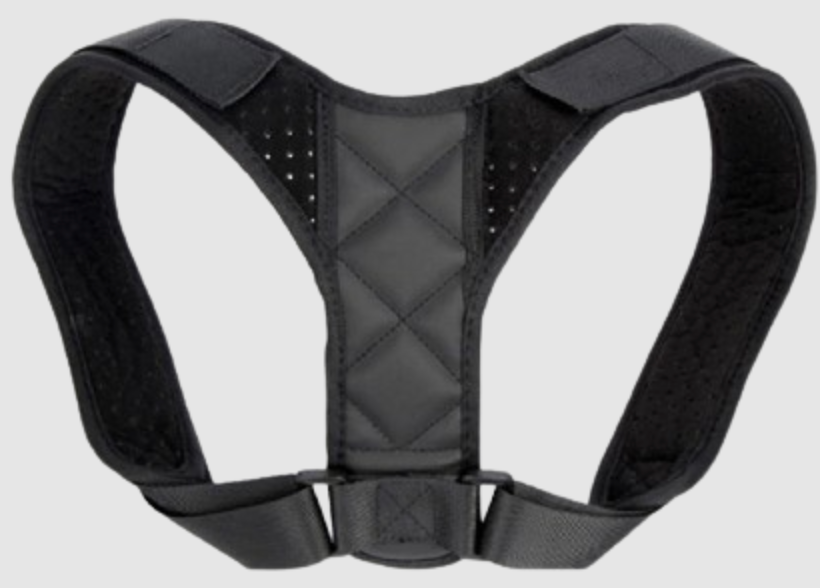
It is a figure-8 shoulder brace. Two padded loops go over your arms and cross in an X between the shoulder blades, where an adjustable back panel joins them. When you set tension, the straps gently draw the heads of your shoulders backward and down, which rotates the upper spine out of its rounded, slumped position.
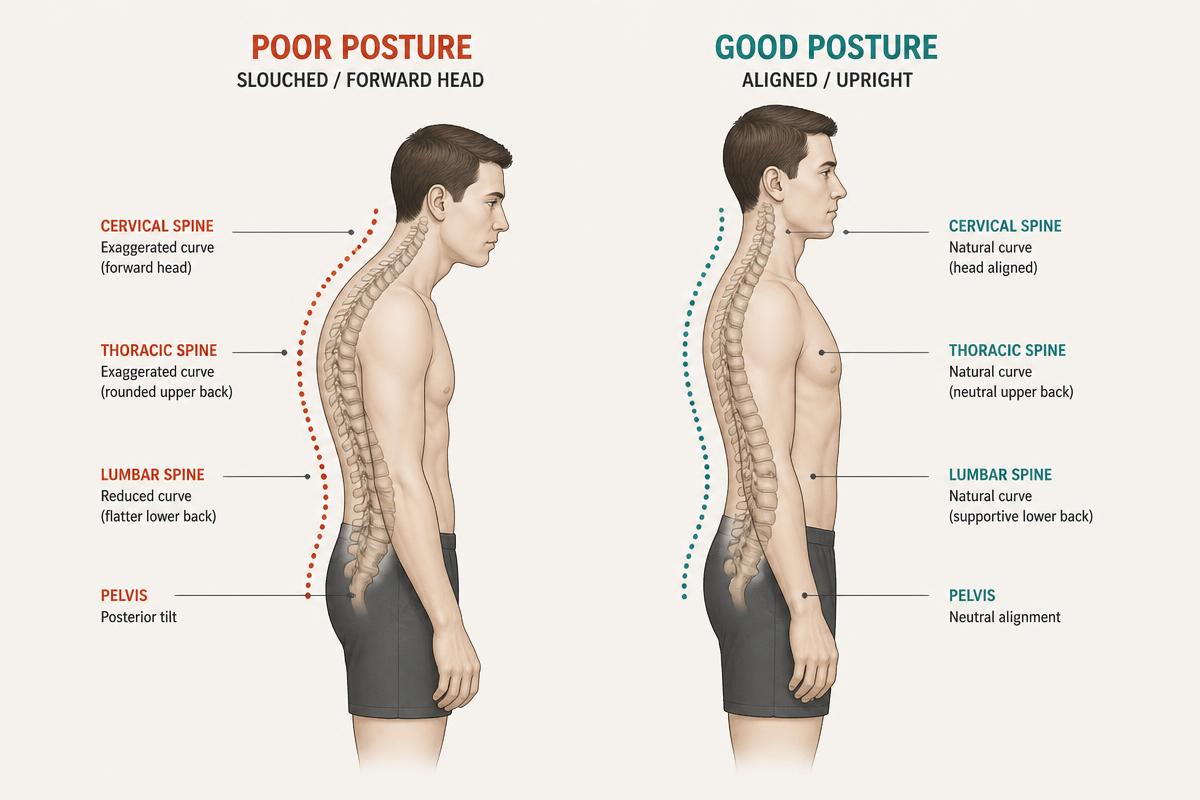
Crucially, it does not do the work for you. What it actually supplies is proprioceptive feedback — the light tug you feel the instant you drift forward. Over weeks of repeated cues, your brain gets faster at correcting before the strap has to say anything. That is the whole mechanism, and it is why wearing it for short, attentive sessions beats strapping in all day.
Forward-head posture stacks load on the neck and mid-back; the brace targets the thoracic collapse in the middle of that chain.
How it feels to wear
The first ten minutes are strange rather than uncomfortable — a slight stretch across the chest, and a distinct awareness of muscles between the shoulder blades that had been off duty for years. By day four that novelty was gone and the brace became almost boring, which is exactly what you want.
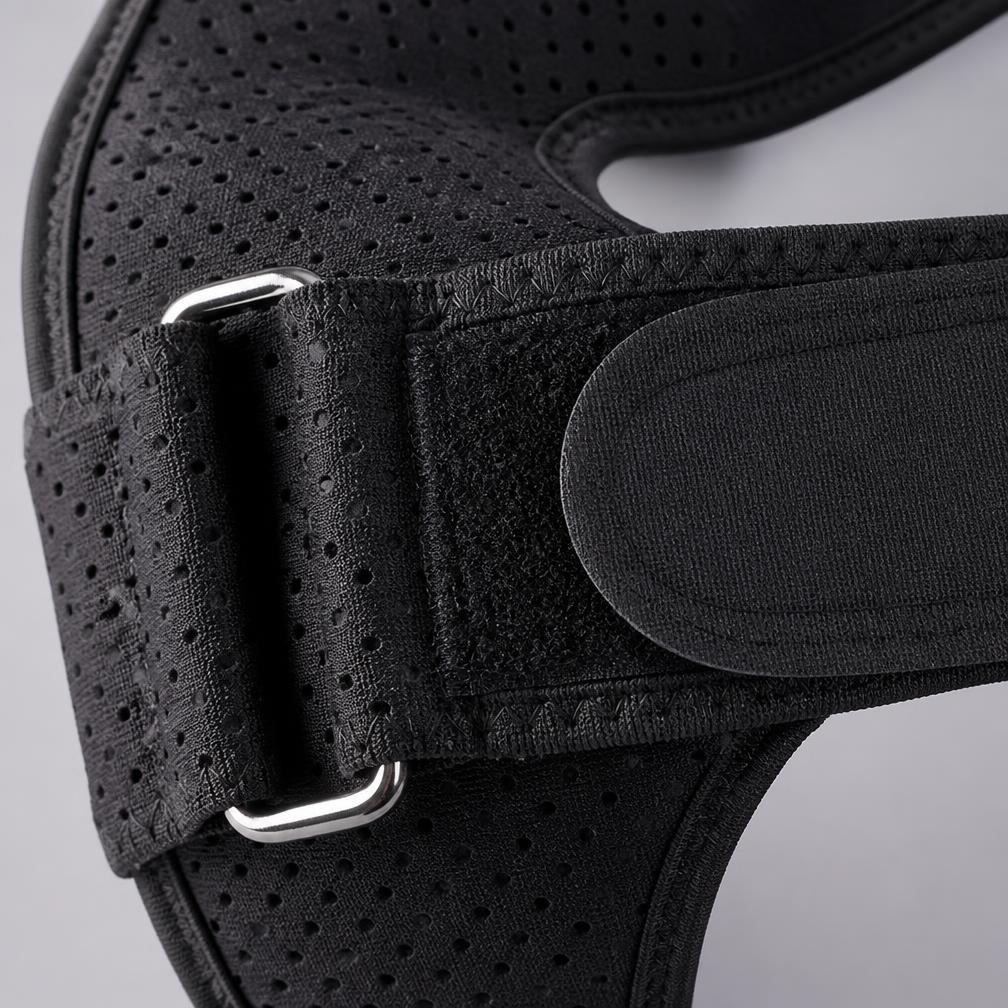
Two things stood out over the month. The padding is perforated the whole way along the loops, so heat does not pool under the straps the way it did with a cheaper brace I tried in 2024. And the tension is genuinely repeatable: once you find your setting on the metal sliders, you only touch the hook-and-loop tabs day to day, so every session starts from the same baseline instead of guesswork.
Honest downsides: the straps are visible through very thin light clothing, and if you overtighten in the first week you will feel it in your armpits by minute twenty. Both are fixable in about ten seconds. Neither is a design fault.
Four design details that matter
Barely-there profile
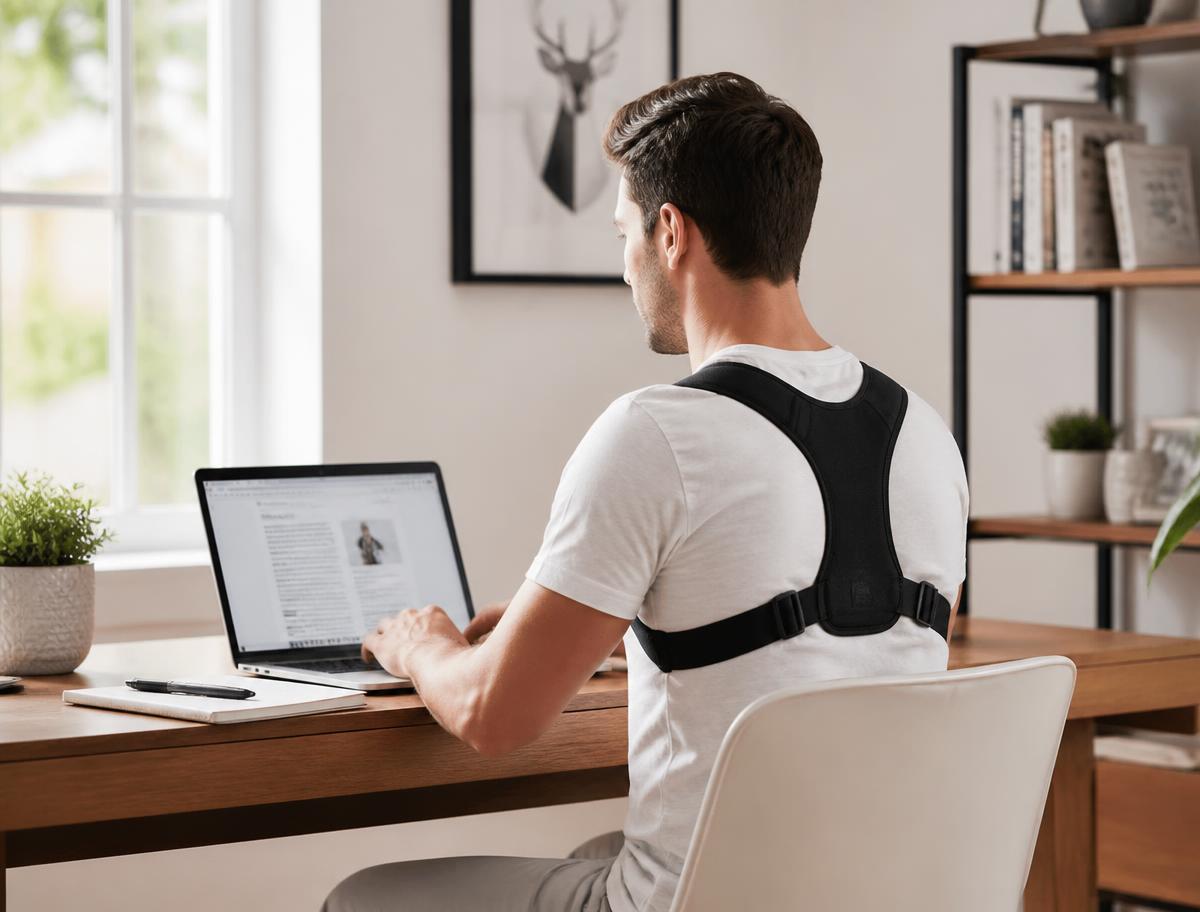
The figure-8 cut sits high across the shoulder blades instead of wrapping the ribs, so it hides under a shirt rather than bulking it out.
Perforated breathable padding
Laser-cut vent holes run the length of both shoulder loops, which is the difference between an hour of wear and a full afternoon.
Dual-slider adjustment
Metal sliders plus long hook-and-loop tabs let you set tension in small increments and repeat the exact same fit tomorrow.
Built for short sessions
It is designed as a training cue — 20 to 45 minutes at a time — not an all-day cast your muscles learn to lean on.
How to wear it correctly
Most disappointed reviews I have read describe one of two mistakes: cranking the straps far too tight, or wearing the brace for eight hours straight. Here is the sequence that worked for me.
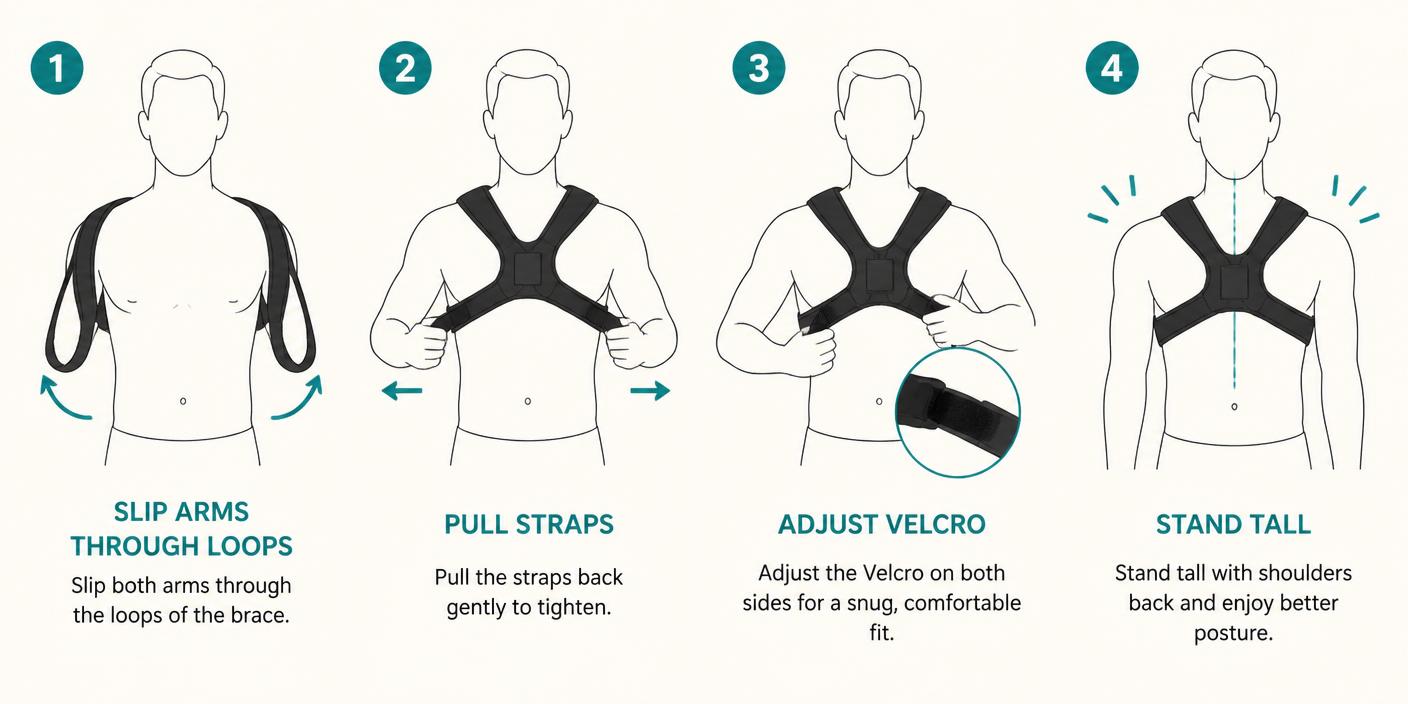
Loosen fully first. Slip both arms through the loops with the X centred between your shoulder blades.
Stand tall before tightening. Set your posture, then pull the tabs — otherwise you lock in the slump.
Aim for a cue, not a clamp. You should feel a light pull when you round forward and almost nothing when upright.
Cap early sessions at 20 minutes. Build to 45 minutes over two weeks; skip a day if you feel soreness.
Add strength work. Ten band rows and ten wall slides after each session is what makes the change stick.
Slip in, pull back, adjust, stand tall — the whole routine takes under a minute.
Who it is for — and who should skip it
A good fit if you spend long hours at a keyboard, in a car or over a phone, notice tightness between the shoulder blades by mid-afternoon, and want a physical reminder while you build strength. It also suits people who have tried rigid full-torso braces and abandoned them for being hot and obvious.
Skip it if you have a diagnosed structural condition such as scoliosis or a recent shoulder or spinal injury, if you feel numbness or tingling in your arms, or if you are hoping to wear something passively all day and never train the muscles underneath. A brace is a coach, not a cure.
Results after 30 days
My honest scorecard: the end-of-day tightness across my upper back is noticeably reduced, and side-profile photos taken four weeks apart show my ears sitting closer to over my shoulders rather than in front of them. What did not happen was any overnight transformation — week one changed nothing measurable, and the shift only became obvious somewhere around day eighteen.
That is the realistic expectation to set. Used as a daily cue alongside a few minutes of strength work, the True Form Posture Corrector™ earns its place. Used as a magic strap, it will end up in a drawer like every brace before it.
Frequently asked questions
How long should I wear the True Form Posture Corrector™ each day?
Start at 15–20 minutes once a day for the first three days, then build toward 45 minutes. Two shorter sessions beat one long one, and you should never wear it while sleeping.
Will it fix my posture permanently?
No brace does that on its own. It supplies the reminder; your upper-back and mid-trap strength supplies the lasting change. Pair wear sessions with rows, wall slides and chin tucks.
Can I wear it under clothing?
Yes. The straps are roughly two inches wide and lie flat, so a t-shirt or knit top covers it. A very thin white blouse will show the dark straps.
Does it work for women and men?
The design is unisex and adjusts across a wide chest range. Measure loosely around your chest at the widest point and use the size chart on the order page.
Is it safe if I have a shoulder injury?
Talk to your physician or physiotherapist first. Anyone with a recent fracture, rotator-cuff repair, nerve symptoms or a diagnosed spinal condition should get clearance before adding compression across the shoulders.
Ready to stop reminding yourself to sit up?
Order the True Form Posture Corrector™ from the official store and try it with a 30-day money-back guarantee.
Disclosure: this review contains affiliate links to the official store. This article is for general information only and is not medical advice; speak with a qualified clinician about persistent pain.